
So, China has launched an investigation into online mapping services by Internet giants including Google and Sohu in an effort to protect state secrets and territorial integrity, according tot the Chineswe state press.
The complete stort ran in most westerne newspapers yesterday, and of course, all over the net, like Yahoo News: China to investigate Google for illegal maps.
As the Chinese apparently are not very happy with the way their borders are shown by Google, be it Maps or Earth, I wonder what they think of the way their military is depitcted. Like their subs in Hsiao-p'ing-tao . . .
Check out: Sightseeing with Google Satellite Maps: China.
Hsiao-p'ing-tao: New Chinese Ballistic Missile Submarine.
As we can see, we don't know what the Chinese can see, from behind their Great Firewall . . . .
Posted by Leon at 11:26 AM | Comments (0)
Wij - heren softbal Jeka, a.k.a. de SuperSonjas - doen er al enige tijd ons voordeel mee; de Google Apps. Perfect om de onderling communicatie te regelen via een Google Group, gekoppeld aan de kalender en een spreadsheet in Documents. Op die spreadsheet heb ik via de mogelijkheid tot sharing alle spelers de rechten gegeven om de sheet te editen, zodat we een overzicht hebben wie en wanneer er gespeeld hebben, wie wanneer gewisseld is, enzovoort. Voor sommigen nog een leerproces, en eigenlijk een beetje overkill, want eigenlijk zouden we het beter allemaal vanuit de Google Calendar en de Group regelen, zonder die spreadsheet. Maar degene die begon met die spreadsheet werkt daar dagelijks mee, en moet nog wat wennen aan al dat Google gedoe, dus ik laat iedereen zoveel mogelijk aanklooien, en dan rolt er op termijn vanzelf de beste manier van werken uit.
Er kan natuurlijk veel meer met de Apps.
Dave Lee legt op Student Journalism Blog uit hoe je de Google Apps als een nieuwsbrief, zelfs als een studentenkrantje kan gebruiken. Als ik er even over nadenk, klopt dat niet alleen, wij doen het al min of meer met onze SuperSonjas. Je wil een nieuwsbrief, een online krantje, nog - uit te bannen Web 1.0 gedachten - als een compleet, dagelijks of wekelijks te ontvangen geheel zien, maar dat hoeft natuurlijk allang niet meer, en dat is het ook niet meer als je je Google Apps aan elkaar knoopt.
Of de duvel ermee speelt: terwijl ik dit zit te tikken valt de nieuwsbrief van De Nieuwe Reporter in mijn Gmail, met ondermeer het volgende kortje: Het Britse vakblad The Journalist van de National Union of Journalists, trekt zich wellicht geheel terug op het web. De journalistenbond moet bezuinigen. De april-uitgave van het zusterblad van De Journalist, verscheen al in pdf-formaat.
Zie: Future of NUJ's The Journalist magazine 'under review'
Misschien op termijn ook iets voor De Nieuwe Reporter zelf, en voor mijn eigen vakblad, NVJ, via VilleMedia al zo goed vertegenwoordigd op het web. VillaMedia en De Journalist zien er keurig uit na de laatste restyling, al zou ik het nog geen Web 2.0 willen noemen. Daar valt nog wel wat winst te halen.
Maar misschien is het nog vloeken in de kerk om journalisten(bonden) op alle mogelijkheden van Google Apps te wijzen. In medialand weten velen nog steeds niet goed wat van Google te denken (behalve dan dat de zoekmachine onmisbaar is). Maar Google News wordt door nogal wat uitgevers en journalisten als een vijand gezien, en niet als een vriend die traffic voor je genereert.
Link: Quick tour of Google Apps.
Link: Comprehensive overview of Google Apps.
Link: Welcome to Google Apps.
Posted by Leon at 03:14 PM | Comments (0)
We knew it was coming: Google Print Ads to Europe
According to The Times, Google is momentarily chatting up 'several' British newspaper publishers in the hopes of extending its Google Print Ads program across the Atlantic.
James Ashton in The Times: This expansion will worry bosses of rival media companies, including ITV chairman Michael Grade, who has already called for greater regulation on the fast-growing Google.
Cade Metz in The Register: When we asked Google if this is true, the company told us "we won't be able to comment on if or when Print Ads will be launched in the UK." But they like being coy.
Click on the image on top of this post or or on this link: Welcome to the Google Print Ads for a Demo (Yes, by Google) of the Print Ads.
Link:
Full list of American Newspapers participating in Google PrintAds
Posted by Leon at 03:16 PM | Comments (9)
Nice Gmail tutoring video on Ask The PC Guide: How to Become a Gmail Jedi Master.
Learn to master Gmail through the use of labels, filters, keyboard shortcuts, vacation autoresponders, and the new IMAP support.One of the most useful features in Gmail is its powerful search feature. They have incorporated the ease and functionality of Google search into Gmail, allowing you yo search for specific emails based on the Sender, subject line, date, or the actual content of the email. However, Gmail has gone one step further with what they call filters and labels.
Posted by Leon at 02:36 PM | Comments (0)
Apparently Google is continually reminded by all of us why they work so hard on Gmail when they hear stories from us about how we're using it. From keeping long-distance relationships alive over chat to saving a historic record of our high school life within a single conversation thread. Now I don't know about you, but for one reason ore another I don't like single long threads. If any thread threathens to become longer than seven, eight or nine pieces, I kill the thread by archiving it, and instead of replying composing a new mail. But of course that's just me . . .
Pinning our stories on the walls around Google hasn't been the best way to share them with the Gmail community, so Google now is inviting us to share our ideas, methods, tricks and secrets with the world. All we need to do need is to produce a video and a story.
As the Google Boys and Girls put it: feel free to get creative with special effects or choreography or just tell it like it is.
Up to my Mac, where's my Canon?
Posted by Leon at 11:03 AM | Comments (0)
![]()
It's something different: a press release on a post card, in my real mailbox. My name and address are handwritten, as is the message: "What Google Can't Do"
Huh?
Remarkable, and perhaps just as wise, as I see too often that press releases are treated as spam in my mail accounts.
The question remains - after having a quick look at the website promoted on the postcard, if this press release should have been directed straight to the dustbin?
Because WorldSiteFinder.com links, in its own words, every website to every world language. It's absolutely not clear to me what they mean by that, and the search results don't blow me away.
Judge yourself: WorldSiteFinder.com
Posted by Leon at 07:57 AM | Comments (0)
Right on top of my Gmail this morning: a red link, indicating something new: 'Watch our video'.
The Gmail asked US a promotion video for THEM, and WE did it. Ended up pretty neat, I must admit, as it was a pretty neat idea to begin with.
A simple one, as all good Google ideas are. All we had to do was to print out a PDF of the red Gmail envelope showing the 'M', and then record a ten second clip of a funny, cool, hilarious or creative way in which this envelope was passed from the left to right. That was all folks, and after we uploaded the result to YouTube, all we had to is wait if we were in. (We're not, cause we forgot about the deadline :-(
But why did we have to pass from left to right?
According to the Gmail blog: you can see this as a symbol of how email connects people from all over, making the world feel a bit smaller. Or as a metaphor for mail exchange servers, Simple Mail Transfer Protocol (SMTP), and all of the technical steps involved in getting a Gmail message around the world from one inbox to another.
The Google Team: We asked you to help us imagine how an email message travels around the world. All it took was a video camera, the Gmail M-velope ( ), and some creativity — and, wow, did you get creative!
The clips you submitted were amazing and it was hard to choose selections for the final video featured here. You can check out all of the submissions we received on YouTube, and read more about it on the Official Gmail Blog.
Enjoy!
Posted by Leon at 09:51 AM | Comments (0)

I'm a bit reluctant to try it myself, cause there's a fat chance, even in The Netherlands, that a Swat team will burst trough my front door within the next ten minutes after Googling: 'How to Blow Up ATM Machines'. Since you've arrived here: learn another beautiful Dutch word, this one for ATM: flappentapper. Slang, made up from slang: flap is slang for paper money, tapper is like in a beer tap.
in Dutch @ DutchCowboys
Anyway' interesting court case, started today in Sydney's Central Local Court. In Australia, as in America, defendants, while innocent until proven guilty, are mentioned with their full names in the media. So we learn that three of the four defendants (Bassil, Taouk and Nassour) are probably of some kind of Arabic origin, which could mean some twenty countries.
While we in The Netherlands enjoy our problems with some of so called second and third generation Maroccans, Down Under the problems are more diverse. For instance Servian youngsters like a good fight with Croatians, and every year around Xmas and New Year there are fighting festivities on the less popular beaches on the south side of Sydney. Large groups of young True Blue Aussies are seeking confrontation with what they call the Bloody Arabs. (If the Arabs don't come young ultra right Australia likes to beat up some Vietnamese or whatever looks 'different'.
Anyway, the court case is interesting for us Dutch Cowboys now that ATM boys are arrested before they blew the flappentappers to smithereens. They landed behind bars after the Australian Feds found out they'd ordered 23 litres of chemicals from the Northern Territory this month. According to Australian Federal Police forensics experts the chemicals could have been used to make up to 40 kilograms of high-powered explosive.
What intrigues me is how the Feds found this out, now that the defendants admitted they have been Googling on how to get the job done. Don't try to Google 'How To Blow Up Flappentappers', but feel free to try 'How to Blow Up ATM Machines'.
Don't mail me the results, because we both might end up in court. It might as well be the case that one or more of those websites the Australian defendants landed on, are honeypots. Where the Feds (American, Australian, French, Dutch, whatever) are posting at the other side of the street, facilitated by Google or American law.
Am I being paranoid? Maybe. But: I'm pretty sure that even in Holland a red light starts flashing, a bell will be ringing, the moment I start buying diesel, sugar and fertilizer in large quantities.
Maybe better too, cause he who has done nothing wrong, has nothing to fear?
Posted by Leon at 09:58 AM | Comments (0)
Kara Swisher visiting Google in Dublin. While the video itself doesn't reveal shocking news, I really love the beautiful Flash player. Way to go!
More video's at video.allthingsd.com/
Posted by Leon at 12:00 PM | Comments (1)
The Tour de France is on. I know how hard it is, cause I went down and out myself two months ago on Alpe d'Huez on my second climb.
Yeah, I know my chain broke in the very first 100 meters of the climb, but that's hardly an excuse for the cramps in my thighs half an hour later.
Nevermind, it was a beautiful day again, and I'll be back next year, lighter and better prepared (and with some spare chains). Last year was a good one, ad I'd like to break that pr.
Mashed up a Google Map for our newspaper, setting up all the stages, and linking them to the plotted stages I could find in Google Maps.
This one's a copy, but a bit different, with the custom zoom script included, cause I really love that script.
When you click the markers you see the links to the stages in Google Maps, as well as links to the same stage on the official Tour de France site.
The source in this map is a bit different from the previous maps I mashed up. All the coördinates, as well as the html in the pop ups is now in the same .shtml file (but parts of the code - the API key being one of them - parsed by an include), where my previous maps read the coördinates from another file.
Just for fun, practising and learning to know the possibilties of Google Mapsd API better.
I really like this one. I could put Google or You Tube Video's from the finished stages on a daily base, bu no more play today, I'm afraid. Very busy building, tuning and translating a new ImageFolio 43.0 Pro photoalbum with visitor upload possibillity for the newspaper where I'm working. More about that later . . .
Posted by Leon at 12:53 PM | Comments (0)
There it was again early this morning, in one of my Google applications; a announcement in red font: 'New Features'.
This time a feature that many people, not able to either forward or redirect from other accounts, impatiently have been waiting for: 'Get mail from other accounts'.
This is a beautiful option, as it enables you to check for the mail you receive at your other email accounts from within Gmail.
Gmail: You can retrieve your mail (new and old) from up to five other email accounts and have them all in Gmail. Then you can even create a customized 'From:' address, which lets you send messages from Gmail, but have them look like they were sent from another one of your email accounts. Please note that you can only retrieve mail from accounts that have POP3 access enabled.
The feature is currently only enabled for a limited number of users. Google says it's working on making it more available soon. As I don't know how big this limited pool of users i, you'll have to check yourself under the 'Accounts' tab in Settings.
Link: How do I set up Mail Fetcher?
in Dutch at @ Dutch Cowboys
Posted by Leon at 09:51 AM | Comments (0)
I just love GoogleMaps! Great what you can do with it, when you get your API key. It took me a while, and some hard work, but finally I'm getting somewhere.
So far I've set up three different maps:
a Big Full Screen Google Map (looks fabulous on my iMac),
and a Geocoder.
Couldn't have realised it without the Google Maps API Tutorial from Mike Williams, the Google Maps API Version 2 Documentation and Mapki.
Check them out, click on te markers, try the Custom Zoom, made possible by the Java Script written by Andre Lewis,
Click the markers on - or next to - the map, and see what you can do with CSS or HTML - even embedded video - in the pop-ups.
I've also begun to expirement with feeding GoogleEarth KML files to GoogleMaps, but I haven't found out yet how to feed KML to the URL of one of my own maps.
Posted by Leon at 02:53 PM | Comments (0)
A little more than a year ago, I wrote a column ('Stralingsangst'), for the newspaper I'm working at, about Fear of Elector Magnetic Fields. Publication resulted in a number of angry letters to the editor. Written by those readers who are very busy with all kinds of sickness and disease, te result of EMF caused by GSM, GPR and UMTS networks in The Netherlands.
in Dutch at @ DutchCowboys
In the discussion aftermath, I repeated a prediction I'd made earlier, when Google started to build its WiFi networks in Mountain View and San Francisco.
My prevision was: 'So far we haven't heard anybody complaining about WiFi, but we can wait until the people that are so busy with GSM, GPRS and UMTS, catch sight of WiFi.
The moment has arrived.
Today, Wired published an elaborate article: Wi-Fi as a Health Hazard
Opening: Riding in on peer-reviewed research, but flunking every major test, the idea that wireless technology amounts to a modern health threat presents a conundrum to proponents and skeptics alike. With Wi-Fi networks blanketing homes, schools and even whole cities, they've become the latest flash point in a struggle that's arced from power lines to microwaves, cell phones and even computers, spanning decades of debate.
Coincidental over here in The Netherlands transmission of 'free to air' analog television ended last Monday, Holland becoming the first nation to switch completely to digital signals, a fact that made a headline even in Australia.
Which leads to the question: might it be the case that there's less EMF in our Dutch air now that analog television is killed? I haven't got a clue, as I haven't read anything about it yet, but if you think you know it, tell me please.
I'm afraid that the if you're afraid there's only one thing to do to protect yourself, for the time being: buy or make a tin hat or cap.
Those really afraid go to LessEMF.Com if you also want to wear tin underwear.
Posted by Leon at 02:03 PM | Comments (0)
Almost half of all users of Google in The Netherlands rather enter a new search word than bother to scroll. Google hits and ads that don't show up in the very first result screen are becoming futile.
That is, according top the results of a survey presented by Ronald Verschueren from NetMarketing at a meeting for members of NIMA (Nederlands Instituut voor Marketing) in Baarn.
in Dutch at @ DutchCowboys
The effect of less scrolling: ads getting more expensive.
'The trend is less scrolling, and we're expecting to see more and more of less scrolling'. It's something also happening on homepages and landing pages, where visitors also tend to scroll less.'
According to Verschueren, director of NetMarketing Usability Experts, 'the effect is that the price of highest ad positions in Google shall rise. To earn back their investments, it will become more important for advertisers to optimize their sites. Optimised sites will result in a higher percentage of sales, while the ad sense costs will remain the same, so that costs and assets will be kept in balance.
While viewing search results, 48% percent of users do not scroll anymore.
In the Netherlands Google is the by 90% of all Internet users the most used search engine.
The behaviour of Google is the most important factor in determining the success of Google ads.
NetMarketing did the survey regarding insurances, loans, travel and consumer products.
Posted by Leon at 10:32 AM | Comments (0)
Google again. Don't say I'm bothering you and that I should start writing about something else, because you would miss things. A week or so ago another one of thosesurveys popped up. As well as over here (Holland) as over there (the US) they come and go several times each year, but this one was to betaken seriously, done by the Stanford School of Medicine.
This time one out of eight grown up Americans exhibited at least one possible sign of problematic Internet use. No idea if I would be part of the digital junkyard, but if so, it's a reassuring idea that my addiction is covered by a salary.
I definitely am a bit addicted to Google. As a user, but even more as a watcher, a Google Watcher with a problem: it's been all too much lately, almost impossible to keep up withwith the boys and girls at Mountain View are doing. I'm not the only one, even Sergey and Larry sometimes are out of breath because of the pace in which young and smart developers are screaming for attention and budget for new products.
Two weeks ago I wrote about business models that are floating on the web, model with which you van set up a profitable webtoko. But also as manager of a little shop or company you can save yourself a lot of money by means of Google products. By terminating your much too expansive Microsoft applications and licenses. To begin witch the Outlook and Exchange servers; Gmail isn't only free, it works so much better and easier than Outlook/Exchange, and youcan keep using your own domain name and e-mail addresses.
You can share documents and spreadsheet by - well - Google Documents and Spreadsheets, and if you start using Maps for Mobiles, youdon't have to buy navigators for your drivers or yourself anymore.
Rent a smart kid who attacks the Google API, an does logistics by integration Documenst, Spreadsheets and Maps.
While there are a lot of other Google gadgets that you can use one way or another, Google starts doing things for education. One of the new products is Sketchup, bye means of which you can designon line - what else, how else? - 3D models. It's no a simple thing for beginners, so Google has launched yet another Google newbie: the Google Teacher Academy. Pfffff, what is next to come ... ?
Posted by Leon at 01:16 PM | Comments (0)
Now what . . . . ? A star is born?
Go to my Geocoder, or Google Maps if you don't trust me, feed the form the adress Prins Hendrikstraat 170, Breda, NL, hit 'Go' and see for yourself. Or go to my GoogleMaps and click on 'A Star Born?
Any clues anybody? My guess: it's the sun reflecting on a glass car roof. But then again: there must be heaps of stars like this in cities where the sun shone when the satelltite or the picture planes passed over. Maybe caused by a glitch in the Aerodata (who does the Dutch pictures) or the Google cameras and/or software.
Posted by Leon at 05:05 PM | Comments (0)
Having big fun playing with the Google Maps API! Got two keys, one for myself, one for the newspaper portal I'm working for, and constructed some pages.
The first one integrated in an iFrame in the newspaper website, and two pages so far for myself, checking out what's possible - and that's a bloody lot. So far I've produced a map with navigation in the side bar, and a second one to get the Geocodes you need for the navigation URL's in the side bar of the first one.
They both look nice now, linking to each other. More work to be done, though. The goal might be to combine all functions in one big map, but I'm not sure I'd like to do that, maybe better to keep it this way. But first I have to learn how to make the pop up's look nicer, maybe use my own icon placemarks, how to integrate the 'to here' and 'from here' directions into the pop-ups.
There's a pretty comprehensive Google Maps API Documentation manual at Google, and I made the first Map at the newspaper based on that manual.
The second and the third map I couldn't have done without the great Google Maps API Tutorial from Mike Williams.
Posted by Leon at 12:57 PM | Comments (5)
I've noted yesterday that Writely was definitely gone, merged with Spreadsheets into Google Documents & Spreadsheets, in which this post is written.
Late yesterday night (CET) a new little linkie when I logged into Google Groups: 'view in Google Beta'.
Click and see how the GoogleGroups interface soon will be looking - maybe this switch is definitely too while I'm writing this - like the recently made over RSS reader.
Wait folks, cause that's not all there is today . . .
Next star on the Google heaven: another little link this morning in Documents & Spreadsheets: Photo.
It leads tot picasaweb.google.com. A web that was already there for a couple of months, but now they've started to integrate it into other services like my personalized Google Start Page, and probably more of the many other Google applications I'm using right now.
On top of every possible tap or page - when logged in - in Google Search, in Gmail, in Calendar, in Photos, in Docs & Spreadsheets, in Groups, in all my services are links to - well, you guess it - Google Search, Gmail, Calendar, Photos, Docs & Spreadsheets, Groups, in all my services. The waiting for Google Office can't be long anymore.
Another new thing is a Picasa up loader for my Mac.
Uploading top Picasaweb could already be done from a Mac, cause in the latest iPhoto sits a little button 'Picasa upload. But as form today there's a beautiful new app for the Mac. All you have to do is click and drag abunch of pictures form a Finder window into another window and you're done and published on Pcasaweb..
Just like I did with Helenes new Black Puppy
Posted by Leon at 03:36 PM | Comments (0)
It's almost - just not yet - Google Office: when I logged into my Google Account ten minutes ago, and clicked my way into Writely, something new appeared: Google Documents.
While some Redmond lackeys start collecting old chairs for Steve Ballmer and then duck for cover, Google has integrated Writely and Spreadsheets into - well- Google Docs & Spreadsheets.
Earlier this morning I was working in the 'old' Writely, noticing nothing new, but now the green and yellow colors are gone, and the new application is dressed in the familiar Google light blue. Just wondering how long it will take until YouTube changes logo and color . . . .
Apart from the integration there are some new features, and of course some improvements. I'll report on them later.
Check out: What's new in Google Docs & Spreadsheets?
Posted by Leon at 11:43 AM | Comments (0)
Lots of flying these days, in Google Earth. It was an easy prediction: since Google announced that the greater part of Holland is covered in high resolution now, alarming stories appeared in the traditional media, and also in the newspaper were I am working. The silly season barely gone, and politicians too busy with the November election as well as the wake of the fire in the detention centre at Schiphol airport, that killed eleven people, no new questions asked in parliament yet, but they will come, later.
By the way: if you have problems with installing Google Earth, for instance because your corporate firewall plays for CIA, you can go to Google, click maps, and it's like you're in Earth.
The high resolution is not very high everywhere. If I zoom in on my own house in Breda, I run into the same blurred images that I saw a year ago, so the satellite or AeroData, that does the job for Google over here, hasn't been back yet.
They did cover The Hague right. I don't know when those shots were taken, but it was on a sunny day. On at least two spots in town you can spot naked people taking a sunbath.
There's really not much to see, because even in this high resolution it's not clear if the sunbather is a he or a she. But it's pretty easy to find out which house in which street, and so a camjo team from Editie.nl from the RTL Channel called at the door in question, but nobody answered. While Big Brother was pretty close to her or his door, another citizen of The Hague, who was zooming in on his house and his favorite pub found his neighbor naked on his rooftop terrace.
My guess is that Google is not going to change anything, like taking pictures only at around zero temperatures - which would be a problem in (sub)tropic countries.
Lets wait for the next association of Google Fanatics: a club that collects shots of nudists beaches and parks.
Gay or punk, be warned; your favorite sport is somewhere on Google Earth.
Posted by Leon at 03:34 PM | Comments (0)
Another step into complete networking. This one is my first post written and published in Writely, the web based text editor from Google. My first looks are very promising; it looks exactly what I've been waiting for. As I am constantly changing, working either in OS X on my iMac back home, or in XP on the corporate Dell Optiplex, I was constantly switching, not only between systems and machines, but also between applications.
in Dutch at @ DutchCowboys
Sometime I used even Word on the Mac, as Word is the de facto standard in my working world, where the word document is synonymous for Word, and the word spreadsheet is synonymous for Excel. Even for my writing I sometimes used to work in Word on the Mac, though mostly in TextMate, as I have been using TextPad for more than ten years in Windows. TexMate and TextPad look at least a bit similar.
For the last couple of weeks I've been using Google spreadsheets to import the content management system error sheets that I have to comment on. Easy does the job: import then in the office, and open them at home, or vice versa. Signed up into my Google Account, everything is accessible from one spot; personalized Google start page, Gmail, Calendar, Spreadsheets, RSS reader, Base, Alerts, Aanalytics, AdSense, and then some more Googlestuff I never use.
With Writely my way of working will be simpler again. For instance until now I used to start an article or a column either at home or at the office, to finish where I started or at another location. Unfinished versions were saved in Gmail as drafts, or saved on my web server. A new way of working from now on: everything I produce will be started as well as finished in Writely, and stay there, probably forever, of at least until published over here, on the blog.
Wikipedia has a comprehensive entry about Writely:
There is no overall storage limit for files. However, text files cannot exceed 500KB and images cannot exceed 2MB.
An important feature is the ability to save all files made in Writely as the following formats: MS Word (.doc), Postscript (.ps), Rich Text Format (.rtf), and ODF (.odt), files that can be opened, edited, and printed in many office suites, making interoperability easier.
Implementation in this case took less than three minutes: choosing Movable Type as my preferred API, checking if mt-xmlrpc.cgi was running in my MT installation (it was), providing the path to this upload module, and providing the right permissions.
One test run, another push at a publish button in Writely, and out of the blue this post was live on my blog. Beautiful!
Posted by Leon at 09:43 AM | Comments (0)

The HP Garage is California Historic Landmark No. 976 — Birthplace of Silicon Valley. (1939 photo)
I’ve asked the question on the Movable Type Community Forum, some time ago, when my server almost collapsed under comment spam form porn- and viagra sellers: male or female?
While the thread in question, like everything else that ever will be written in the future, can be found by Google in a second: Is a server a he, or a she, like a ship?
in Dutch at @ DutchCowboys
I’ve never have maintained a relation so long without having seen her – or him. In 1999, while spending eight months of a sabbatical year in San Francisco, we drove to an address in Napa, right in the middle of the vineyards north of Marin County. Somewhere over there, was my guess, krijnen.com was living, because that was the address where the Tabnet bills came from.
When we noticed it wasn’t a server park, but some cubicles filled with young people phoning or working a desktop, I decided to forget about asking to see my server (they’d probably called a psych and the cops). The rest of the afternoon was better spend, doing what most people come to Napa for: tasting wine.
In hindsight we’ve set a trend then, because in 2006 nerds are doing day trips form San Francisco to important benchmarks in computer history. Like the main office of Apple in Cupertino, the Google campus in Mountain View. And the garage where Hewlett en Packard started playing with transistors in 1939, regarded as the birthplace of Silicon Valley: 367 Addison Avenue, Palo Alto.
Since Wednesday Mountain View, thanks to Google, is the first place in the world completely covered under blanket of wireless Internet. Through 380 hot spots, that serve 72.000 people on sixteen square mile with sufficient bandwidth.
You get free access through your gmail account, and if you don’t have one, you can get one, for free.
Mountain View is a test for the first big free wifi network Google is planning to set up: San Francisco, forty miles north. The inner city alone at least ten times bigger, so at least a couple of thousand hot spots, and a few million users, slurping bandwidth.
The question is what the consequences are for the classic providers of Internet access. How to compete with Google.
By the way; is Google a Mr. of a Mrs?
Posted by Leon at 08:02 AM | Comments (0)
It appears that some people get wiser when they get older. While I leave any judgement regarding myself to my readers, I'm thinking longer than before about some things before I'm thinking anything about them. The big question is if it's because of wisdom, or because dying grey matter. Twice this week I've messed up my coffee making by putting coffee in the steamer, and milk in the coffee pad. Just a bit absent-minded, right?
Maybe because I was thinking about Google while making my morning coffee. Amnesty International has launched a campaign in which it accuses Google, Yahoo and Microsoft of aiding the repression of freedom of information and expression in China.
in Dutch at @ DutchCowboys
Yahoo has been the target of Amnesty before, when it lend the Chinese authorities a hand in locating dissident journalist Shi Tao, who was subsequently put in jail for ten years.
Microsoft kowtowed to the Chines government when it closed a weblog on MSN, and when you Google 'Falung Gong' from within China you're not getting what you're requesting.
By the way, when you Google for 'Falung Gong' on Google.cn from The Netherlands, the very first hit is a 'Fuck China' website. My guess is that you will see another result from an Internet cafe in Shanghai, so if you might read this form there give it a try and let me know.
But Google from anywhere else on 'Google and China' and you've got some stuff to study.
By chance - thanks from my colleagues from documentation at the newspaper, who put it on my desk - I've read the monthly magazine of the Dutch arm of Amnesty International. First conclusion: Amnesty doesn't censor it's own magazine; the editors are independent journalists.
Or did I read the article about Google too quick? I'll be rereading the cover story about Google and China this weekend, because in my mind it's a well written justifiable story. Maybe Google's position regarding China isn't really defended in the article, but I remember at least some understanding.
For Google it's Hobson's choice: filter Falung Gong, filter dissidents, and if not, Google will not be passing the Great Chinese Firewall at all.
What to do?
Update 23.6.2006: Link: Internet Filtering in China in 2004-2005: A Country Study (Thanks to Rick Beemsterboer).
Posted by Leon at 03:49 PM | Comments (1)
A Belgium network-monitoring company called ServersCheck is going to sue Google because it's tool bar points directly to pirated software.
The suit claims that the 'Google Suggest' feature tells possible new buyers of ServersCheck software where to get the latest cracks and illegal versions.
According to Maarten Van Laere, ceo of ServersCheck, a search on ServersCheck will give you suggested search terms such as 'serverscheck crack,' 'serverscheck pro crack,' and 'serverscheck keygen'.
original post @ DutchCowboys
Google says it will remove websites with illegal content from its index, but it cannot tweak the Suggest feature citing censorship concerns.
The real news is in the previous sentence. I mean, big or little companies suing Google for one reason or another . . . Some do it because they don't show up in the places where they would like to show up, other show up where they don't want to be seen, and some sue because they like some publicity.
So; the real news is that Google says it cannot do something. Crap, because Google can decide tot the very letter, to the very bit what shows up where. Apart from that; Google does allow censorship of its product in China. Now what makes this impossible in Belgium? Tell me.
Posted by Leon at 10:18 AM | Comments (0)
This one is written in the newest root at the ever expanding GoogleTree: Notebook. While I'm writing, I'm figuring out what it can do for me, five minutes after I've downloaded and installed it on my iMac as an extension of Firefox. Although the boys and girls from Google warned me in the disclaimer that the Notebook extension might be a bit buggy on OS X, nevertheless it's working like everything else that Google delivers: interface as simple as possible, and fast.
Dutch translation @ DutchCowboys
Like almost every other handy browser tools, the Firefox extensions; whenever they're working on my Dell XP at the newspaper, they will run as well on the iMac on OS X.
By cultivating and watering my expanding collection extensions my Mac starts a bit to look like what it inevitable and unavoidable will be in the near future: a network machine running only one program: the browser, operating system as well as web browser and everything else.
Lets call it the Xbrowser, or the Gbrowser, or SuperFirefox, whatever, but when I'm looking at my machine, I'm having a look at the future.
Thanks to the integration of GoogleSearch, Gmail, GoogleGroups, GoogleCalendar, Google-RSS, -Notebook, the browser based content management systems I'm using for my work (Escenic) as well my digital kindergarten (MovableType) there are days that I'm hardly ever leaving Firefox.
The Web Developer Plugin lives up to it's name, I'm writing, reading and communicating from my browser. In the meantime my music is conducted from within Firefox, by means of just another plugin that iTunes obeys.
There's only one elementary part missing, and Firefox (running, one might say, on top of iTunes) is the only program I will need. The last plug in (nice title for a movie) is the one I will be using to resize and enhance my pictures before the'yre being kicked to the web, through another web-based interface. For enhancing and resizing I'm using Paint Shop Pro on the Dell or PhotoShop on the Mac at thome.
Actually I wouldn't even need them anywmore; as well the nepwspaper content management system as my personal version of ImageFolio automatically generate the right sizes for thumbnails and photoalbums, and ImageFolio als sharpens on the fly, by means of scripted median values.
But both applications accept only smaller than sizes: Escenic only less than 1500 pixels width or height, ImageFolio's iBulc uploader only less than 3 or so mb. Which means first I have to resize, and there's no resizer - yet - in the Web Develoment plugin for Firefox.
Yeah, I know there's Picasa, and that's free - and it's from Google as well - but being a browser freak I want it to be integrated as well.
Posted by Leon at 04:46 PM | Comments (6)
In tegenstelling tot Amerikanen en Australiërs, die geen geheim van hun salaris maken, en van wie je bij kennismaking soms al in de eerste zin zowel inkomen als voornaam te weten komt, lopen Nederlanders niet gauw te koop met wat ze verdienen. Voor wat het allemaal waard is, want je weet toch nooit wat opschepperij, of wat waarheid is.
Met bloggers en bezoekcijfers is het niet anders. Zolang internet bestaat wordt er door gearriveerde media gegoocheld met hits, pageviews en sessies, en verschilt de nieuwe digitale wereld in niets van de oudheid, waarin men al wist dat statistieken de overtreffende trap van leugens zijn.
De kleine bloggers, waar ik mezelf onder schaar, kunnen er ook wat van. Op weblogs of verjaardagsfeestjes hoor ik ze weleens met een uitgestreken gezicht vertellen dat ze op vakantie gaan van wat ze met de advertenties van hun Google Adsense programma verdienen.
Zelf niet onverdienstelijk qua kijkcijfers is mijn hobby tegenwoordig gratis, want sinds enkele maanden worden de kosten van mijn server gedekt door Google. Da's leuk, maar van dertig dollar per maand kan ik niet op vakantie. Wellicht heb ik nu al een stommiteit begaan.
Ik mag toch aannemen dat de Belastingdienst niet alleen bezig is met alles voor ons gemakkelijker maken, maar dat ze intussen zelf - uiteraard via een dagelijkse portie Google - op beginnen te letten wie er allemaal adverteert via Google, en wat dat zo ongeveer dokt. Ik kijk dus niet vreemd op als in mijn volgende digitale aangifte naar Google gevraagd wordt, en dan maar hopen dat niet alleen iMac en breedband, maar ook de uren die aan bloggen en hacken besteed zijn, als aftrekpost beschouwd worden.
De komende tijd zal ik in moeten leveren op het door Google verstrekte percentage van mijn inkomen. Een bewust gekozen stapje terug, qua bloggen dan. Dit is mijn laatste bijdrage tot 15 april. Tot die tijd ben ik op vakantie.
Er wordt in die tijd niet geblogd, want backpacken door Zuid-Amerika is zoveel leuker zonder dagelijks een internetcafé te moeten bezoeken. Wie mij niet missen kan bladert maar wat door de archieven en de fotoalbums, waar als surprise wel eens een noodgedwongen dump als back-up van nieuwe foto's uit de Digital Ixus op zal duiken.
Zes weken zonder updates zal de pageviews en AdSense clicks niet ten goede komen. Waar ik het dan wel van doe? Eh . . . .
Posted by Leon at 10:06 AM | Comments (8)
Cringely signaleert dat Google volgens The Register wel degelijk bezig is met het ontwikkelen van een Ubuntu variant als Linux OS voor de desktop, al dan niet in samenwerking met Dell. Ubuntu is op zijn beurt gebaseerd op Debian/Gnome, en The Register suggereert Goobuntu als naam.
Dat wordt uitkijken in Redmond, volgens Cirngely, want als Steve Ballmer hier lucht van krijgt, vliegen er weer stoelen door de kantoortuinen.
Cringely: EarthLink gets wormed, Google takes desktop turn?
The Register: Google at work on Desktop Linux
Posted by Leon at 02:11 PM | Comments (1)
Afgelopen week met met Google News aan de gang geweest, zowel de Nederlandse als de Amerikaanse uitvoering, en nu zit ik na te denken wat de voor- of nadelen voor de krant zouden kunnen zijn.
In de geest van de jonge Bill Gates, die, als zijn vader naar boven riep dat het eten koud werd, kwaad naar beneden schreeuwde dat ie na zat te denken. Kop dicht!
Google News? Zoals alles van Google reuze gemakkelijk en razend snel, maar verder zijn de meningen over wat Google doet, zoals steeds vaker, verdeeld.
Het ANP en de GPD hadden in Nederland aanmerkelijk minder tijd nodig om na te denken, want terwijl het lint nog maar amper doorgeknipt was, werd een kort geding aangekondigd. Typische reactie van digitale Neanderthalers die na vijftien jaar slapen tot een verrassende ontdekking komen: er bestaat zoiets als internet!
Er zijn er meer ontwaakt: de World Association of Newspapers (WAN), een internationale vereniging van krantenuitgevers, heeft een Task Force opgericht tegen de zoekmachines op internet. Citaat: 'tegen de zoekmachines op internet, die massaal artikelen gratis reproduceren'.
Wat die WAN precies is, en wie daar allemaal bij aangesloten zijn, is me niet helemaal duidelijk, maar ik begrijp er na lang nadenken op dit moment nog niets van. Reproduceren? Ik denk dat een van de dingen die je als krant op internet zou moeten doen: vooral mogelijk maken dat Google je slagboom passeert, om alle content tot diep in de database te indexeren. Zodat bezoek vanaf Google, dankzij Google, vanzelf toeneemt.
Het kost niets, als je het handig aanpakt. Een van de manieren, als je dan toch de volgens mij achterhaalde registratie wil handhaven, is zelf de koppen van alle artikelen plus aanhef en meta-tags indexeren en die vóór de slagboom laten besnuffelen door de zoekmachines. Of de Google spider een gratis abonnement verstrekken, voor het leven.
Kleine moeite, veel plezier, kijkend naar mijn eigen Google gedrag. Als er iets op de voorpagina van Google News verschijnt dat me intrigeert, klik ik naar de website van de nieuwsboer. Daar zou ik nooit komen, nu ben ik er dankzij Google.
Wat is het probleem?
Zie ook de VolkskrantBlog: Dom achterhoedegevecht . . .
Posted by Leon at 05:10 PM | Comments (2)

Stel dat je online een doosje kopen kan dat een dag later wordt thuisbezorgd. Het is net zo groot als een adsl modem, en je kunt er alle stekkers in steken die je in huis hebt. 240, USB, RJ-45, TJ-11, Cat5, analoge en digitale video, optisch geluid, glasvezel, en zonder stekkers doet het ding ook nog wat met WiFi en Bluetooth.
Steek er een stekker in en het werkt, of het nou high speed internet is, streaming video, geluid, games, VoIP, IPTV, ouderwetse telefoon, en u heeft er geen omkijken naar. Stel dat u zo'n doossie kopen kan, en kost minder dan een iPod of een XBox, zou u dat dan doen?
Terwijl ik het antwoord op die vraag niet eens afwacht, is een belangrijker vraag wie dat ding maken gaat.
Dat antwoord, volgens Bob X. Cringely is Google, zodat nog maar een vraag resteert: hoe het ding heten gaat? Volgens Bob drie mogelijkheden: Gbox en Gcube klinken al lekker, en Gspot is natuurlijk een prachtige naam.
Zelf moest ik even aan Virgil denken, waar ik al enkele malen eerder aan gerefereerd heb, voor de eerste maal in 1998. Lees die na, en zie dan de Virgil als een draagbare Gspot. Whatever.
Lees in ieder geval de twee laatste columns van Cringely, en kijk uit naar de laatste van deze maand, waarin hij afrekent met zijn eigen voorspellingen van het afgelopen jaar.
Zelf ga ik me de komende dagen - weken - met mijn eigen high tech doossie bezig houden, want ik heb gisteren eindelijk mijn 20inch iMac G5 opgehaald. Het heeft even geduurd vanwege levertijden, eerst van de Mac zelf, vervolgens nog even wachten op de twee gigabyte geheugen die apart besteld moest worden.
De installatie van die witte doos is om te beginnen geheel en al volgens alle door Apple gewekte verwachtingen verlopen. Gisteren op de krant uitgepakt, stekker in het stopcontact, netwerkkabel erin, totaal - met het verwijderen van piepschuim en cellofaan - vijf minuten werk.
Vijf minuten, en alles werkt!
Internet, de ingebouwde camera, mail, infrarode afstandsbediening in de vorm van een Shuffle, muziek, noem maar op.
Nou nog een Gspot, en het digitale leven is volmaakt.
Bob X. Cringely: The Sweet Spot (By Choosing Where NOT to Compete, Google Can Win the Broadband Game)
Last week: The Google Box (Taking over the digital world four ounces at a time)
Posted by Leon at 09:19 AM | Comments (4)

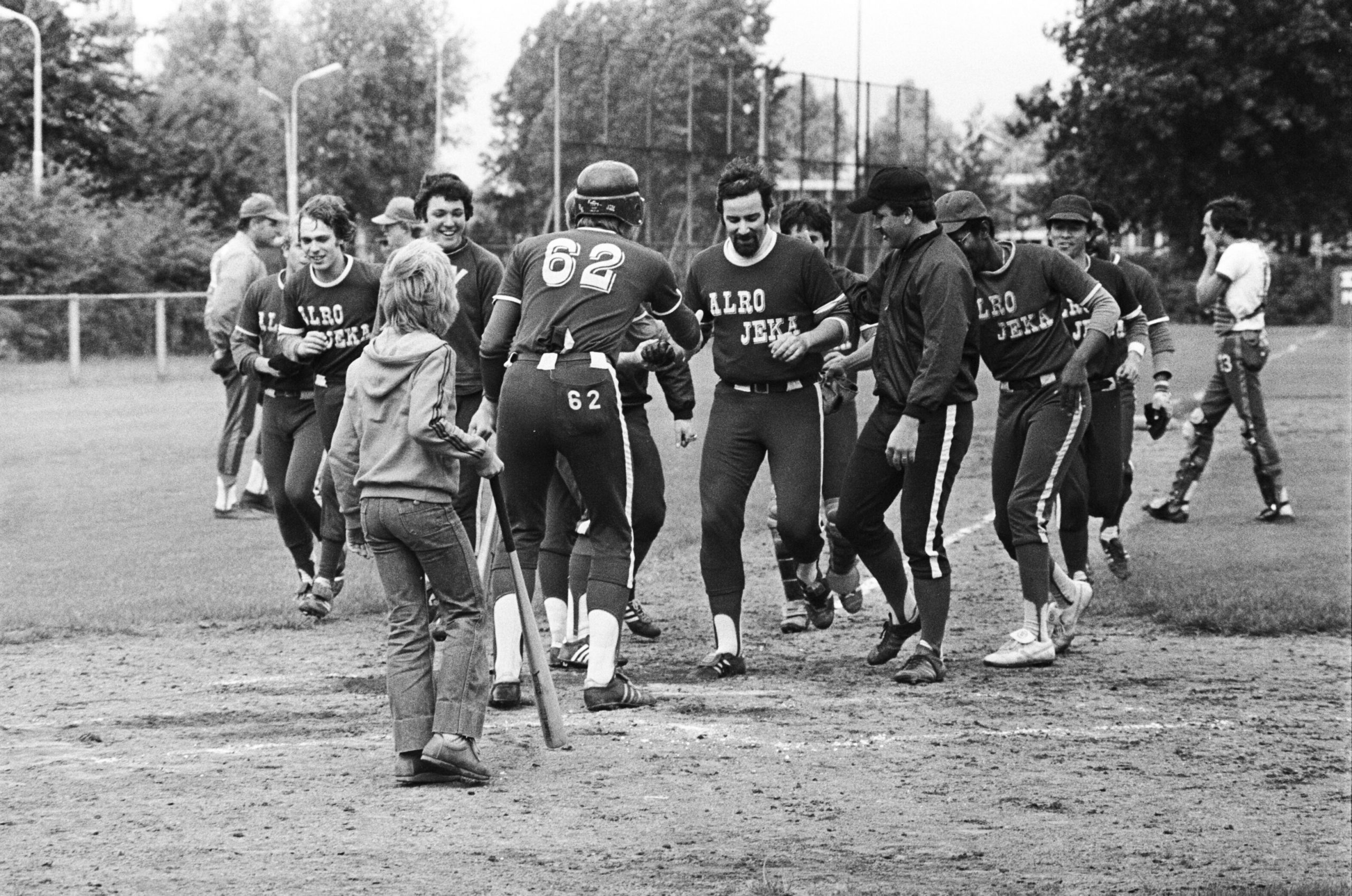
In real life - at least in summer - I'm playing second base in a friday night old geezers softball team. Now, almost winter - and like Snoopy I can only hope that my summers are not starting to look like winters, from a pitchers point of view - I'm playing Google Base.
I've uploaded, batch uploaded, and created a Google ftp-account. While doing all this because sooner or later I'll be writing about it over here, or in our newspaper, I'm starting to live the life of a Google Gridder more each day.
It worries me to see how about ninety-five percent of my colleagues probably seem to think that Google is a search engine - though that's only my guess, and that percentage might be even lower. Anyway, I'm pretty much sure about the fact that more than ninetyfive percent of those who do know that Google is a search engine, think that it's just that: a search engine.
Since I first read about Google while living for eight months in San Francisco, during my latest sabattical, (march 1999 - may 2000, US, Mexico, Canada, Western Samoa, Hawaii, New Caledonia, New Zealand, Australia, parts of Asia), I've always kept a keen interest in Google.
There a Google lovers, and Google haters, Google warners, and Google addicts. Official and unofficial Google Blogs and columnists like Bob Cringely are trying to analyze and predict what Google is doing.
Like Bob X this week: a fascinating story about another secret box Google is building: Google Mart. (Sam Walton Taught Google More About How to Dominate the Internet Than Microsoft Ever Did).
Cringely: There, in a secret area off-limits even to regular GoogleFolk, is a shipping container. But it isn't just any shipping container. This shipping container is a prototype data center. Google hired a pair of very bright industrial designers to figure out how to cram the greatest number of CPUs, the most storage, memory and power support into a 20- or 40-foot box. We're talking about 5000 Opteron processors and 3.5 petabytes of disk storage that can be dropped-off overnight by a tractor-trailer rig. The idea is to plant one of these puppies anywhere Google owns access to fiber, basically turning the entire Internet into a giant processing and storage grid.
According to Cringely - read him always, by cripes!- it's game over for the competition, and he's going to write more about it next week. Feed his feed to your feeder!
Now do I like or dislike what Google is doing? Should we be worried about the fact that most journalists and governments are not interested - yet - in what Google is doing, do not know or care, while Google keeps on building the Grid?
We don't know yet, while Google keeps on building it's digital Babylon, so as the Grid grows, I'll play my Google base. I can always change teams - if there are any other teams left in 2014.
To be honest: right now I haven't got a clue what Google Base could do for me, but I'm playing anyway.
Five or six Google things do work for me: of course the search engine, where it all began with. Perfect GoogleMail, alsways fast, up, working, so much better than my bosses Outlook exchange servers, a constantly pain in the ass. GoogleGroups, set up as an experiment for the communication for my softballteam, works perfect. GoogleAdsense of course, wich will never make me rich, but the monthly revenues top my Verio HP Unix 11i 3000 hosting plan bills, wich is good enough for now.
Signed up for the Adsense program came the Google SiteSearch Box, wich works so much faster than the Movable Type search script, that I've stripped MT search from my MT installation. If you search something on my blog, Google will find it for you, and one of the things I haven't got time for so far to check out is the Google Blog Search. No more trackback attacks, no internal search, have dramatically improved the performance of the blog. Google Earth, because it is so much fun, an addicting application in itself, and only try to imagine how that will work in another ten years!
Thinking and speaking about performance and stabilty, trackbacks, comment spam, Movable Type and Google; I could strip the comment system from Movable Type, and use GoogleGroups as a standalone comment system.
It could be done in a minute or so.
All you have to do is kill the mt-comment.cgi, and/or change a few lines in the mt-config. Second step is to replace the <MTComments> . . . </MTComments> with a link to the GoogleGroups account that you've created.
Set the access settings and the posting and delivery settings wide open (or apply any rules if you like) and there you go: all comments stay far away from your server, as well as comment spam. If comment spammers are starting to trying to flood your GoogleGroups, it's Google who will take care of counter attacks.
Or, maybe create a Blogger account (owned by Google), and use that as a comment base for your Movable Type installation.
Mmmm, I'll think about that one. My time is up for today, gotta do some real life renovations. In the meantime I'll keep thinking about the Grid.
Posted by Leon at 12:58 PM | Comments (4)
(En na zoveel jaar honkiebal weet ik onderhand dat er ook nog secundo and third base en - en als je maar ver genoeg slaat ook nog een home plate liggen). Ben benieuwd wat dat gaat worden.
Here we go: Today we're excited to announce Google Base, an extension of our existing content collection efforts like web crawl, Google Sitemaps, Google Print and Google Video. Google Base enables content owners to easily make their information searchable online. Anyone, from large companies to website owners and individuals, can use it to submit their content in the form of data items. We'll host the items and make them searchable for free.
Posted by Leon at 09:47 AM | Comments (0)

Hele mooie site: We Reporters GeoNews = GNews + GMaps. Wat-ie doet is het plotten van de Google News Headlines op Google Maps, naar eigen zeggen in Real Time. Om met de Cyberjournalist te spreken: cool!
Dat dit ooit - snel? - aan Google Earth gekoppeld gaat worden, lijkt me niet zo moeilijk te voorspellen.
Fascinerend; terwijl ik dit zit te tikken, en op mijn andere monitor Wereporters staat, wandelt de applicatie vanzelf op en neer tussen Europa, de Verenigde Staten, overal waar een verse headline wordt toegvoegd, wandelt-ie heen. Is dit de toekomst van RSS? Visual RSS?
Posted by Leon at 10:24 AM | Comments (1)

Nog maar eens Google, het bedrijf dat ooit als zoekmachine begon, maar dat intussen steeds meer onze digitale wereld gaat beheersen, op weg naar het Google Grid. Dat is een term die anderen verzonnen hebben om te duiden - of te waarschuwen voor - wat Google allemaal aan het doen is, werkend aan de realisatie van het Grid. Volgens de tegenstanders van Google is het Grid een vleesgeworden virtuele Big Brother, en dan hebben we het over die van George Orwell, en niet die van de televisie.
Volgens Bob Cringely doet Google veel van wat het op dit moment allemaal doet vanwege een simpele reden: omdat ze het kunnen. Dankzij het superieure talent van oprichters Sergey Brin en Larry Page, en door de miljarden die met de beursgang zijn binnengehaald. Met dat geld halen ze de beste talenten van Stanford binnen, waar ze zelf summa cum laude zijn afgestudeerd, met dat geld doen ze leuke dingen.
Wat ze officieel naast zoeken presenteren is op dit moment een verzameling tools die voor velen onmisbaar zijn. Ze komen zo ongeveer iedere week met iets nieuws op de proppen.
Intussen is het gissen naar wat er achter de schermen op dit moment allemaal ontwikkeld wordt. Terwijl San Francisco als eerste stad in de Verenigde Staten onder een dekbed van gratis draadloze bandbreedte wordt bedekt, is deze week de nieuwste loot aan de Google boom ontloken: een RSS reader. Werkt geheel volgens de drie belangrijkste normen van Google: gratis, perfect, razendsnel. Net nu ik u Bloglines een week of wat geleden heb aangeprezen als de perfecte online newsreader. Waar ik intussen razend nieuwsgierig naar ben is Orkut, de virtuele community die Google aan het uitbouwen is. Werkt net zoals Gmail vorig jaar alleen nog maar op uitnodiging. Wie heeft er een invite voor me?
Posted by Leon at 09:26 AM | Comments (4)

Hebben we deze al gehad: the Google Reader? (met dank aan Stefan Bracke die me tipte).
Spend your time reading what you care about most.
To get started: In the search box above, enter the name of a news source or topic (e.g., new york times or college football) and click "Search for new content."
When you find something that looks interesting click on its title to preview. Click on a subscribe button to get new items from that site whenever it updates.
If you know where a feed lives you can enter the feed URL.
Or you can import subscriptions from other programs. You can export them as well.
Even geprobeerd, en, net als alles van Google, het loopt weer als de brandweer!
Posted by Leon at 09:00 AM | Comments (1)
Dit persbericht is net gearriveerd: Geachte persrelatie,
Sun Microsystems houdt vandaag een telefonische persconferentie over initiatieven tot samenwerking met Google.
Dr. Eric Schmidt, Google Chairman of the Executive Committee and Chief Executive Officer en Scott McNealy, Sun Microsystems Chairman and Chief Executive Officer voeren het woord. U kunt deze sessie vanaf 19.30 uur volgen via uw inbelgegevens. Kort na de conferentie is de playback service actief.
Wat nou? Sun en Google samen de desktop op, denk ik. Bij Microsoft loopt Steve Ballmer nu al te vloeken en te tieren, en Larry Ellison bij Oracle ook.
Gauw aandelen Google en Sun kopen?
Zie ook: Is the sun setting over Redmond?
Aanvulling: persaankondiging is te volgen via
Webcast: www.sun.com/events/google
of wcdata.sun.com/webcast/archives/VIP-2166
Posted by Leon at 10:58 AM | Comments (2)
Gratis Wifi voor iedereen? Volgens Om Malik van Business 2.0 zit het eraan te komen. Artikel verscheen vier dagen geleden, maar is pas gisteren opgepakt door Slashdot.
Mailik schetst hoe Google in staat is om alle steden in Amerika te bedekken met een Wifi deken. Volgens hem is Google al lang bezig met het kopen van 'miles and miles' glasvezel, en zijn er diverse netwerken opgekocht als voorbereiding op Google.Net
Malik: Free Wi-Fi? Get Ready for GoogleNet.
Slashdot: Google to offer free WiFi?
Posted by Leon at 11:46 AM | Comments (3)
Hier en daar heibel is over de macht van de zoekmachine en mediamogul, maar wij kunnen van Google geen genoeg krijgen. Wij, dat zijn u en ik, want als er iets blijft groeien, dan is het wel Google, met de zoekmachine en met de nieuwe mogelijkheden die het bedrijf in sneltreinvaart zelf maakt of opkoopt en vervolgens op de markt gooit. Ook de lezers van BN/DeStem en de bezoekers van www.bndestem.nl blijken geinteresseerd in Google en Gmail. De tweehonderd invites voor een Gmail account die we voor u bij elkaar geschraapt hadden, waren binnen een paar dagen aangevraagd en gehonoreerd.
Slechts nieuws voor wie naast dat net gevist heeft, maar het goede nieuws is dat we elders op het web - met dank aan Hans Postelmans, de webmaster van www.haagsebeemden.nl - bijna 5000 invites gevonden hebben. Verder bleek een account die ik begin juli geactiveerd heb en daarna stomweg vergeten was, door Google van 50 invites voorzien te zijn. Wie afgelopen week door vrienden of bekenden lekker gemaakt is: stuur een mailtje en u ontvangt alsnog per ommegaande een uitnodiging voor een kersverse Gmail account.
Zoals een journalist beaamt: eerst iets over Google-haters en onoorbare streken die Google volgens hen uithaalt. Tik 'evil google' in Google, en de machine komt terug met ruim 8500 hits. Bovenaan de website die zichzelf benoemd heeft tot de officiële Google Watcher, met voor minstens een paar volle dagen negatief leesvoer en waarschuwingen ten aanzien van de activiteiten van Google en Gmail.
Ook in het Nederlands volop gekanker: tik 'protesten Google' in Google, lees en geniet. U kunt dus niet zeggen dat u niet gewaarschuwd bent, maar ik neem het allemaal met een pond zout. Bezoek de protestpagina's, lees alles, als u de tijd daarvoor heeft, en trek uw eigen conclusies. Terwijl ik tot nader bericht Gmail vrolijk blijf gebruiken, hebben we intussen een andere mooie dienst ontdekt: Google Groups.
Aangetrapt voor mijn softbalteam, na een onderonsje tussen de Nederlandse en Belgische bond pardoes in de Belgische competitie gedumpt. Beregezellig, maar zie die velden in Antwerpen, Herselt, Berendrecht, Beveren en Borgerhout maar eens te vinden. Het is dus wel handig om via internet routeplanners uit te wisselen en een mailing list te onderhouden, ook al vanwege de in vakantietijd prangende vraag of we genoeg man op de been kunnen brengen op vrijdagavond.
Op mijn vorige mailserver was een softbal mailing-list aangemaakt, waar vandaan alles automatisch op en neer stuiterde. Met de verhuizing naar mijn nieuwe server werd die list vanwege spambeheer beperkt tot een te klein aantal adressen. Je kunt dan wel gaan scripten of andere stunts uit gaan halen, maar dat is extra gedoe.
Gauw een phpbb-bulletin board geinstalleerd, maar daar was altijd wel iets mee. De ene keer weigerde het kreng om me als administrator in te loggen, de volgende keer verdomde hij het om mail te versturen. Altijd wat en niet alleen het beheer kwam op ondergetekende neer, ook de extra megabytes drukten op zijn account. Moest simpeler kunnen, tijd voor iets anders.
En toen klikte ik bij Google per ongeluk op 'Groups' inplaats van op het ernaast staande 'Images', toen ik op zoek was naar een plaatje. Verroest, dát was precies wat we nodig hadden en het werkt als een tierelier. Die zuurpruimen van Google Watch zullen het wel een levensgevaarlijke inbreuk op privacy enzovoort vinden, maar wij zijn mooi uit de brand.
Google Groups is een ideale manier van communiceren voor - het woord zegt het - groepen. Groepen vrienden en/of vriendinnen, clubs, verenigingen en ik zie er ook nog wel voordelen in voor op de werkvloer.
Een groep aanmaken is een klusje van vijf minuten. Je maakt jezelf beheerder, de groep krijgt een e-mail adres en je voegt de e-mail adressen van wie je maar wil, toe aan de groep. De rechten en mogelijkheden zijn zeer divers, dus je moet er even goed voor gaan zitten en nadenken wat je er precies mee wil. Of je gaat er meteen mee aan de slag en je past het boeltje later aan. De belangrijkste vraag die je moet beantwoorden, is of alles wat de groep publiceert voor de hele wereld zichtbaar is en of de content door de robots van Google geindexeerd mag worden. Zet je er een slagboom voor, dan moeten de leden van de groep hun username en password gebruiken en is je groep afgeschermd van de buitenwereld.
Verder moet je de leden van de groep wel of geen rechten verstrekken op het plaatsen van nieuwe entries. Het gemakkelijkste voor iedereen is als een mailtje naar het adres van de groep automatisch op het web geplaatst wordt en daarnaast bovendien vanzelf naar ieder lid gemaild wordt. Omdat het softbalteam niets te verbergen heeft - ook niet interessant voor anderen - staat onze groep wagenwijd open, maar wees gewaarschuwd: wie minder openbaar wil zijn, moet zijn rechten goed vaststellen, anders gaat het goed fout.
Google Groups is tevens de oplossing voor de vraag die een aantal lezers me gesteld heeft, nadat ze de afgelopen week zelf aan de Gmail gegaan zijn. In Gmail zit de mogelijkheid (nog) niet, maar Google Groups is de perfecte oplossing voor wie gewend was om vanuit Outlook groepjes en/of clubs te bedienen.
Tja, wie weet, blijken die Google-haters op termijn wel gelijk te krijgen en ben ik mettertijd mijn ziel steeds meer aan de digitale duivel aan het verkopen.
Stilletjes ben ik vanzelf dagelijks veelgebruiker van Google, Google Images, Gmail, Google Groups, Google Earth, Google Globe, Froogle, MyGoogle, de GoogleToolbar, Google Maps, Google Desktop Search, Google Adsense en Picasa geworden.
Wat ik me afvraag: zit ik straks bij Doctor Phil op de sofa om van mijn Google-verslaving af te komen?
Posted by Leon at 08:54 AM | Comments (11)
Ik kan kennelijk maar geen genoeg van Google krijgen; vandaag een Google (beta) Group aangemaakt, voor De Super Sonjas.
Hier op mijn toko (vrij in de open lucht, maar zonder wegwijzers) draaide sinds het begin van het lopende honkbal/softbalseizoen een phpbb forum waarin mijn softbalteam - met die welluidende naam - communiceerde over trainingen, wedstrijden en wat dies meer zij.
Nou is die applicatie misschien wat te licht voor een man/vrouw of vijftien, en misschien heb ik er wat te weinig ervaring mee, maar het is altijd wel wat met phpbb. Het zal misschien aan firewalls en weet ik veel wat nog meer liggen, maar de ene keer kan ik niet inloggen als beheerder, - of blijft het me om de haverklap vragen om opnieuw in te loggen - en de andere keer verdomt-ie het om me uit te loggen. Verder kun je er als beheerder wel een mass mailtje uitsturen, en kan je jezelf als lid op een topic abonneren. Maar wat niet kan (althans niet in de standaard configuratie) is abonneren op iedere nieuw topic. Dat is nou juist wat je wel wel met zo'n applicatie die vooral voorziet in prangende vragen als wie er bij de eerstvolgende wedstrijd niet kunnen, en waar dat veld in België ligt waar we nog nooit gespeeld hebben. Nou zijn er ongetwijfeld weer mods voor phpbb, maar ik heb nog meer te doen, dus naar iets simpels en snels gezocht.
Dat lag hier dus om de hoek, bij de beta van Google Groups. Ik heb een open Group aangemaakt, waarin alle nieuwe leden kunnen posten, en waarin de content door de spiders van Google bezocht kan worden. Drie vliegen in een klap: een paar megabyte aan ruimte vrij gemaakt op mijn server (alle phpbb php's, de static files plus de tabbellen op de database), geen onderhoud en ergernis meer, en weer een onderwerp om over te schrijven komende zaterdag: Google Groups. Een beetje IT'er begrijpt waar ik me aan bezondigd heb: outsourcing, en het kost nog niks ook!
U leest maar mee, als u wil, want we hebben niets te verbergen; De Super Sonjas zijn voorzien :-)
Posted by Leon at 03:15 PM | Comments (0)
Deze had u nog tegoed van me. Ik had beloof hier uit te leggen hoe Googles Gmail als RSS-reader te gebruiken.
Met dank aan Randy Charles Morin, op wiens website KBCafe je de URL van iedere gewenste RSS-feed in een venster kan knippen en plakken, waarna je een validatie-link per mail ontvangt. Heb je die eenmaal geactiveerd, dan krijg je iedere keer als betreffende feed een update krijgt, per RMail van KBCafe.
Koppel dat signaal via een filter aan je Gmail account, en installeer de Gmail notifier (voor Microsoft Internet Explorer en voor Firefox beschikbaar), dan gaat er iedere keer een signaaltje af als een van je feeds ververst wordt.
Voordeel: je hebt geen extra RSS-reader meer nodig, als je toch al Gmail gebruikt. Ik heb mijn filters zo ingesteld dat-ie op subject van desbetreffende feed labelt, en die meteen in het archive van Gmail stopt.
Zie je, terwijl je zit te werken, het vlaggetje van de Gmail notifier omhoog gaan, dan kun je daarop klikken, ben je even van je machine weg geweest, dan zie je vanzelf in Gmail aan je filters dat daar een feed ververst is aan het getal dat tussen haakjes achter het filter staat. Speel er maar eens mee, en leer het gemak kennen.
Overigens zou je natuurlijk ook een en ander op ongeveer dezelfde manier met Outlook in elkaar kunnen steken, maar ik hoef niet te weten hoe; met dat programma werk ik zo weinig mogelijk, al moet ik af en toe wel vanwege mijn interne account op de krant.
Posted by Leon at 04:05 PM | Comments (1)
Het grootste computergenot dat me de afgelopen jaren ten deel gevallen is: Gmail. Wat een fantastisch mailprogramma en wat een plezier om mee te werken.
Dat realiseerden we ons op de internetredactie afgelopen maandag maar weer eens dankzij een streek van KPN, waardoor we ongeveer 24 uur van Gmail verstoken bleven.
Gmail werkt via het https protocol, een standaard volgens welke twee computers elkaar eerst de hand schudden en vervolgens door een beveiligde 'tunnel' gegevens toe gaan sturen.
Zodat er niemand mee kan koekeloeren, terwijl je mail over het net schiet. Als u via internet bankiert, gaat dat ook over https, maar omdat daar iets meer belangen mee gemoeid zijn, moet u zich bij de bank ook nog op een andere manier bekend maken. Bijvoorbeeld door middel van uw bankpasje, dat eerst door uw computer gelezen moet worden, in combinatie met de pincode of door middel van een zogenaamde 'challenge'.
Zelf heb ik een apparaatje gekregen van de bank, die ik om te beginnen met een vijfcijferige pincode moet aanslingeren. Vervolgens log ik aan bij de bank, die me verwelkomt met een code van negen getallen. Die cijferreeks moet ik weer aan mijn machientje voeren, dat negen nieuwe cijfers ophoest. Pas als die aan de computer van de bank zijn verstrekt, komt de verbinding op gang en kan ik met mijn rekeningen mijn gang gaan. Het is een beetje een gedoetje, maar ik begrijp dat het niet veel anders kan en dat ik op deze manier niet bang hoef te zijn dat een digitale onverlaat mijn tegoeden plundert.
Afgelopen maandag kon dat allemaal niet, althans niet vanachter de firewall van ons bedrijf, en dat lag weer aan KPN. Dat zondagmiddag een update van de software van de firewall installeerde, waarna half Nederland geen https-verkeer meer kon gebruiken. Bankverkeer vanachter een hoop bedrijfsfirewalls was de hele dag onmogelijk. Wat niet zo'n ramp was, want de meeste mensen gaan niet in het zicht van hun collega's hun bankrekeningen op het scherm halen.
De internetredactie had andere problemen: omdat de registratie van de website ook via https verloopt, konden we de hele dag niet controleren wat we op de website veranderd, geplaatst of geredigeerd hadden. Als het er maandag een beetje raar heeft uitgezien: u weet nu waar het aan lag.
Daarnaast kon niemand zijn webmail gebruiken, want niet alleen Gmail, maar ook Hotmail en vrijwel alle door providers beschikbaar gestelde webmail systemen maken tegenwoordig gebruik van https. Er werd dus nogal wat afgekankerd op KPN, maar ja, het is en blijft techniek en waar techniek gebruikt wordt, kan altijd iets fout gaan.
Dat Gmail ga je dus wel erg missen op zo'n dag. Niet alleen mijn persoonlijke account, want sinds vorig jaar april doet mijn eigen mailserver nog maar een ding: niets bewaren, alles doorjassen naar mijn Gmail. Niks meer te maken met opslagproblemen en virussen, alle ellende de deur uit.
De twee grootste voordelen van Gmail: de opslag van twee gigabyte (iets meer, want Google geeft je 2440 megabyte!) en het geruststellende gegeven dat spam en virussen door Google tot vrijwel nul gereduceerd zijn, terwijl je daar zelf niets voor hoeft te doen. Dat het programma daarnaast altijd bliksemsnel reageert en je mail net zo flitsend doorzoekbaar blijft met de zoektechniek van Google. Wat een genot, vergeleken met die achterlijke zoekfunctionaliteit van Outlook, die op een Exchange server bovendien nooit vooruit te branden is.
Voor twee fotoacties (Vakantiekiek van de dag en Het mooiste in Breda) die op de krant en de website lopen gebruiken we nu het adres zomerfoto@gmail.com. Door die vette opslagruimte van Gmail hoef je de mensen die foto's in willen sturen niet lastig te vallen met allerlei regeltjes omtrent omvang en beeldformaten. Verder niks te maken met de it-afdeling, volgens wie mailboxen bij twee megabyte (een procent van Gmail) overvol zijn. Hetgeen standaard de merkwaardige medededeling 'Uw mailbox is te groot' oplevert, terwijl-ie volgens mij op dat moment te klein in plaats van te groot is.
Als onze lezers naar Gmail jpg of bitmaps op willen sturen van 4 megabyte, als attachment of ingebed in het mailtje, het maakt allemaal niets uit. Gmail slikt alles en hoest alles weer flitsend op, als je het nodig hebt; op moment van schrijven iets van 400 foto's, totaal 369 megabyte. De gemiddelde inzending is derhalve 0.9 megabyte en ik vraag me af of dat een landelijke gemiddelde is.
Er kan nog veel meer mee, volgens hackers en nerds die dat kunnen weten. Zelf ben ik er niet aan begonnen, maar Gmail kan vanaf uw computer als externe harde schijf benaderen worden. Wat ik wel gedaan heb: Gmail als rss-reader gebruiken. Voor nieuwsgierigen: ik zal op mijn weblog uitleggen hoe dat te doen.
We begrijpen dat u staat te trappelen om Gmail te proberen. Het slechte nieuws is dat Gmail nog steeds in de beta fase verkeert en dat u een account alleen maar kan krijgen, als u door een andere gebruiker uitgenodigd wordt. Wat de criteria precies zijn, daar zijn we hier niet achter, maar kennelijk verschijnen er op een goede dag 50 'invites' op je account als je die maar vaak genoeg gebruikt. Het goede nieuws is dat we dat gedaan hebben, zodat we vanaf drie Gmails uitnodigingen mogen versturen.
Dat zijn er in totaal bijna 150, want er zijn er al een paar de deur uit naar collega's en vrienden. Stuur een mailtje naar zomerfoto@gmail.com en we drukken op de knop 'Give Gmail too', zodat U per ommegaande een uitnodiging ontvangt. Als u op een link in die uitnodiging klikt, komt er vanzelf een proces op gang waarmee u zelf een Gmail-account aan kan maken.
Wie het eerst komt, wie het eerst maalt. Veel plezier ermee.
Posted by Leon at 12:04 PM | Comments (15)

Ik had de vraag in februari al willen posten, maar toen is-ie door mijn hoofd geschoten en daarna ben ik een tijdje weg geweest. Gisteren bijgepraat met Henk de Hooge en natuurlijk gaat het dan over Google (en Google), en schoot het me weer te binnen: begin dit jaar heeft Google een enorme lap grond gekocht in zo ongeveer de middle of nowhere: het dunbevolkte noorden van Oregon, in het noordwesten van de Verenigde Staten.
In Nederland is er in februari voor zover mij bekend door niemand over geschreven, maar in Amerika wel. Bijvoorbeeld op 16 februari door Kathy Gray in The Dalles (let op Dalles, en niet Dallas) Chronicle: Port deal with Google to create jobs.
Google betaalde $ 1.87 mildoen dollar voor ruim 30.19 acres, omgerekend 12.2 hectare. De verslaggeefster legt, zoals het een economie schrijfster van een lokale krant beaamt, netjes uit wat het aan banen betekent (tussen de 50 en 100 nieuwe banen). Verder is het een lang en economisch verhaal, waarin lokale hotemetoten en dergelijke aan het woord gelaten worden.
Het vreemde is dat in het hele verhaal niemand zich afvraagt wat Google met zo'n lap grond van plan is. Het lijkt wel alsof ze er in die uithoek van uitgaan dat Google een soort supermarktketen is, dat een distributiebedrijf nodig heeft.
Toen ik haar verhaal gelezen had bleef ik zitten met de prangende vraag: wat Google in godsnaam van plan is met een enorme lap grond in Oregon, met opties op nog veel meer acres?
Die vraag is op 19 mei door Bob Cringely beantwoord in: Creationism, Why No Single Entity is Capable of Dictating the Future.
Het antwoord op Why does Google want a chunk of rural Oregon? is volgens Cringely niet zo moeilijk: It's the electricity, you stupid!.
What the heck is that for? This is beautiful land outside any major city. Not enough land for a corporate campus, but that's okay, because there isn't much in the way of local housing, anyway. So what's it for?
It is probably for a data center -- a one million-plus square foot data center that could easily be inhabited by a million or more CPUs. The attraction for Google is reliable electrical power since their new property is not far from one of the many dams and powerhouses that make up the Bonneville Power System.
Waar heeft Google dat datacenter voor nodig: voor de web-accelerator. Wat is de web-accelerator? Lees Cringely.
Posted by Leon at 10:03 AM | Comments (5)

Wie over een breedbandverbinding en de juiste grafische kaart beschikt; wees gewaarschuwd voor Google Earth, want het is verslavend. Het zal misschien de leeftijd zijn, of de wellicht daarmee samenhangende verzuringsgraad, maar wat ik de afgelopen decennia ook allemaal met de computer en internet heb uitgehaald; spelletjes zijn niet aan mij besteed. Van Google Earth kan ik maar niet afblijven; ook al is het geen spel, ik begrijp nu wel waarom mensen aan games verslaafd raken. Als je er eenmaal aan begonnen bent is het moeilijk stoppen met deze fascinerende applicatie, waarmee je letterlijk iedere plaats op aarde met klikken en zoomen kan bekijken.
Foto: RBC stadion, Roosendaal.
Link: GoogleGlobeTrotting
Link: Scavenger Hunt
Link: Green Watching
Link: Close Encounter
Link: Digital Scrapbook
Wie veel van reizen houdt, gaat op zoek naar de plaatsen die hij ooit bezocht heeft, maar het is natuurlijk ook een bijzonder interessante uitdaging om je eigen huis, en met een beetje mazzel, je eigen auto, in beeld te krijgen. Dat lukt nog niet altijd, maar probeer jezelf eens voor te stellen wat er met dit programma over een jaar of tien allemaal mogelijk is. Live video-feed vanaf een satelliet, voor iedereen te zien vanaf internet? Net zoals in de science fiction komedie 'Man in Black', waarin Tomme Lee Jones peinzend inzoomt op het huis van zijn teloor gegane liefde, en haar aan het eind van het eindeloze zoomen recht in het gezicht kijkt omdat ze in de tuin aan het werk is en omhoog kijkt.
Google Earth is een gigantische database van luchtfoto's van iedere plaats op de wereld. Ze zijn door satellieten en vliegtuigen gemaakt, en ze zijn allemaal minder dan drie jaar oud. De database is samengesteld door Keyhole Digital Mapping Corp, in oktober 2004 door Google, dat na de beursgang een paar miljard te besteden had, overgenomen. De razendknappe programmeurs van Google hebben een applicatie geschreven die al die miljoenen luchtfoto's naadloos aan elkaar geplakt heeft, resulterend in een aardbol: Google Earth.
Als je het programma gedownload en geinstalleerd hebt (het eist ongeveer 200 megabyte vrije ruimte op je harddisk) kun je er onmiddelijk mee aan de slag. Wel goed uitvogelen, want met de ene grafische kaart draait het programma alleen in Dirext X, en met de andere wil het alleen maar in de Open GL standaard starten. Dat is een kwestie van een keer proberen, en als het werkt, kun je over de hele wereld wandelen en afdalen.
Ga om te beginnen eens naar een Amerikaanse stad waarvan de luchtfoto's al in een hoge resolutie en in 3D beschikbaar zijn. Daal naar Manhattan af, maak met een klik alle gebouwen zichtbaar, kantel het uitzicht en het is net of je er met een helikopter vlak boven zit. Je kunt de straatnamen aan- en uitzetten, en als je 'dining' en 'lodging' aanvinkt, wordt heel Manhattan onder een deken van namen van restaurants en hotels bedorven.
Van 38 Amerikaanse steden zijn op dit moment de hoge resolutiefoto's beschikbaar, naast een groot aantal steden en gebieden in andere landen. Op Google.Com (Nog niet op Google.nl) zie je na een klik op 'More' een link naar Google Earth, met download en uitleg. Daar valt te lezen dat Google Earth de komende jaren alleen maar uitgebreid zal worden en dat het doel van het Keyhole Project is om alle plaatsen op aarde met een resolutie van 15 meter per pixel in beeld te brengen. Da's nog net niet genoeg om vanuit de ruimte een krant te lezen, maar de koppen zijn op die scherpte wel degelijk zichtbaar, als je maar lang genoeg blijft inzoomen.
Het is natuurlijk niet zo verrassend dat Bagdad een van de steden in hoge resoutie is, want de Amerikanen moesten tenslotte toch weten waar ze die kruisraketten naartoe stuurden in de twee Golfoorlogen. Wat Nederland betreft is het zo op het ook volslagen willekeur, maar dat zal meer met beschikbaarheid en aanbod van luchtfoto's te maken hebben dan met historische keuzes. Hoe dan ook, er zijn in Nederland maar een paar lappen in de hoge resolutie, en een daarvan betreft een groot gedeelte van de westelijk Noord Brabant. Bredanaars moeten nog even geduld hebben, maar in bijvoorbeeld Roosendaal, Halderberge en Steenbergen kun je inzoomen tot de auto's in de straten zichtbaar worden, terwijl hetzelfde geldt voor een flinke taartpunt Bergen op Zoom. Een van mijn Roosendaalse collega's beweert dat-ie zijn eigen auto voor de deur heeft herkend.
Zoals dat altijd gaat op internet, onstaat er onmiddelijk nog nieuwere dingen en ideeën op iets nieuws. Om te beginnen de vereniging van Google Globetrotters die elkaar in forums naar interessante plaatsen sturen, zoals Neverland van Michael Jackson, en huizen van andere bereoemdheden, of verlaten militaire bestemmingen in Nevada.
Google Earth is niet als spel ontworpen, maar de Scavenger Hunt heeft er al wel een razend populairt spel van gemaakt: er wordt bijvoorbeeld een foto van een gebouw met een kenmerkende vorm getoond en de vraag is uiteraard: waar op aard? Er doen duizenden mensen aan mee, en de oplossing komt meestal binnen een uur binnendwarrelen. Natuurbeschermers zijn begonnen Google Earth te gebruiken voor het spotten van illegale houtkap, want álle foto's zijn immers minder dan drie jaar oud. Verder heb je mensen die een zoektocht maken langs hun verleden en daarover publiceren in weblogs en fotologs.
Natuurlijk kon ik het niet laten om op zoek te gaan naar de boerderij in de Australische outback die we ieder jaar bezoeken, ver in het grote niemandsland ten westen van Dalby en de Audora Downs. Zou dat lukken? Het kostte me een stief kwartier, maar ondanks de ruwe resolutie heb ik de watervoorraad, de tuin en het huis gevonden. Een bijna ontroerend monument, waarbij ik de neiging kreeg om naar Tom en Pam te zwaaien. Zal er ooit een moment komen dat je via internet op die momenten, op die manier, naar elkaar kan zwaaien? Wie weet.
Posted by Leon at 10:38 AM | Comments (9)
Teletekst is een ouderwets gereedschap dat dezer digitale tijden kaarsrecht overeind blijft. Let maar eens op, als er ergens in Nederland door het journaille aan navelstaren gedaan wordt. Als iemand in een redactiezaal - krant dan wel televisierubriek - door een collega geinterviewd wordt, hangt er vaak een monitor aan de muur die op pagina 101 van Teletekst staat.
Je zou Teletekst als de moeder van alle RSS readers kunnen beschouwen. De applicatie brengt het belangrijkste nieuws in beeld, via kopregels, het laatste nieuws komt bovenaan te staan en de feed ververst zich zelf. Daarom begrijp ik niet waarom ze hun spullen zo (nog) niet aanbieden; ze hoeven er niets extra's voor te doen en ik wed dat-ie binnen de kortste keren de populairste RSS feed van Nederland is.
Ook op de internetredactie, waar alle nieuws uiteraard zo goed mogelijk op de voet gevolgd wordt, is Teletekst een van de belangrijkste nieuwsleveranciers. Teletekst is vrijwel net zo snel als de redactionele kanalen, zoals bijvoorbeeld ANP, GPD, Reuters, AP en EPA. Soms zijn ze een paar minuten sneller, soms iets trager. Soms doen ze het te snel en wordt een bericht binnen enkele minuten van een andere kop en/of tekst voorzien. Ze nemen dus misschien iets meer risico dan andere persbureaus, die een extra check doen voor het nieuws de deur uitgaat. Met verschil van systemen kan het weinig meer te maken hebben in deze tijd, waarin iets gepubliceerd is op het moment dat het naar een webserver gestuurd is.
Hoe dan ook, het toeval wilde dat ik gisteren aan deze column begon toen mijn oog op Teletekst viel en het bovenste regeltje repte over ontploffingen in Londen. Teletekst wordt altijd meteen voor bewezen diensten bedankt op het moment dat het echt iets te melden heeft. Gans het land schakelt op die momenten met de afstandsbediening in de ene hand naar de eerste de beste nieuwszender op de (digitale) televisiezender en surft met de muis in de andere hand naar de favoriete nieuwssite.
Dat zijn de momenten waarop analoog digitaal verslaat. Al luistert de complete wereldbevolking op hetzelfde moment naar de radio, al zouden er tien miljard mensen op hetzelfde moment naar dezelfde televisiezender kijken, het zou niks uitmaken. Hoe anders op het web, waar een server maar een maximaal aantal verzoeken per seconde af kan werken, of waar het, als de machine vet genoeg is, de vraag is of de pijplijnen dik genoeg zijn.
Er zal ooit een moment komen dat we het allemaal via glasvezel doen of via draadloos internet met protocollen waar we nu alleen maar van kunnen dromen, maar het is pas 2005 en onze digitale wereld is nog niet volmaakt. Bijna vier jaar geleden, bij de terreuraanslagen in New York, bezweken nogal wat websites, waaronder in Nederland bijvoorbeeld nu.nl en startpagina.nl, onder de massale belangstelling.
Ook donderdagmorgen gaven die enkele keren niet thuis, net als de website van de Telegraaf en van de BBC. Al is het, zoals altijd op internet, vrij lastig om te duiden wat er nou werkelijk aan de hand is. Voor wie,